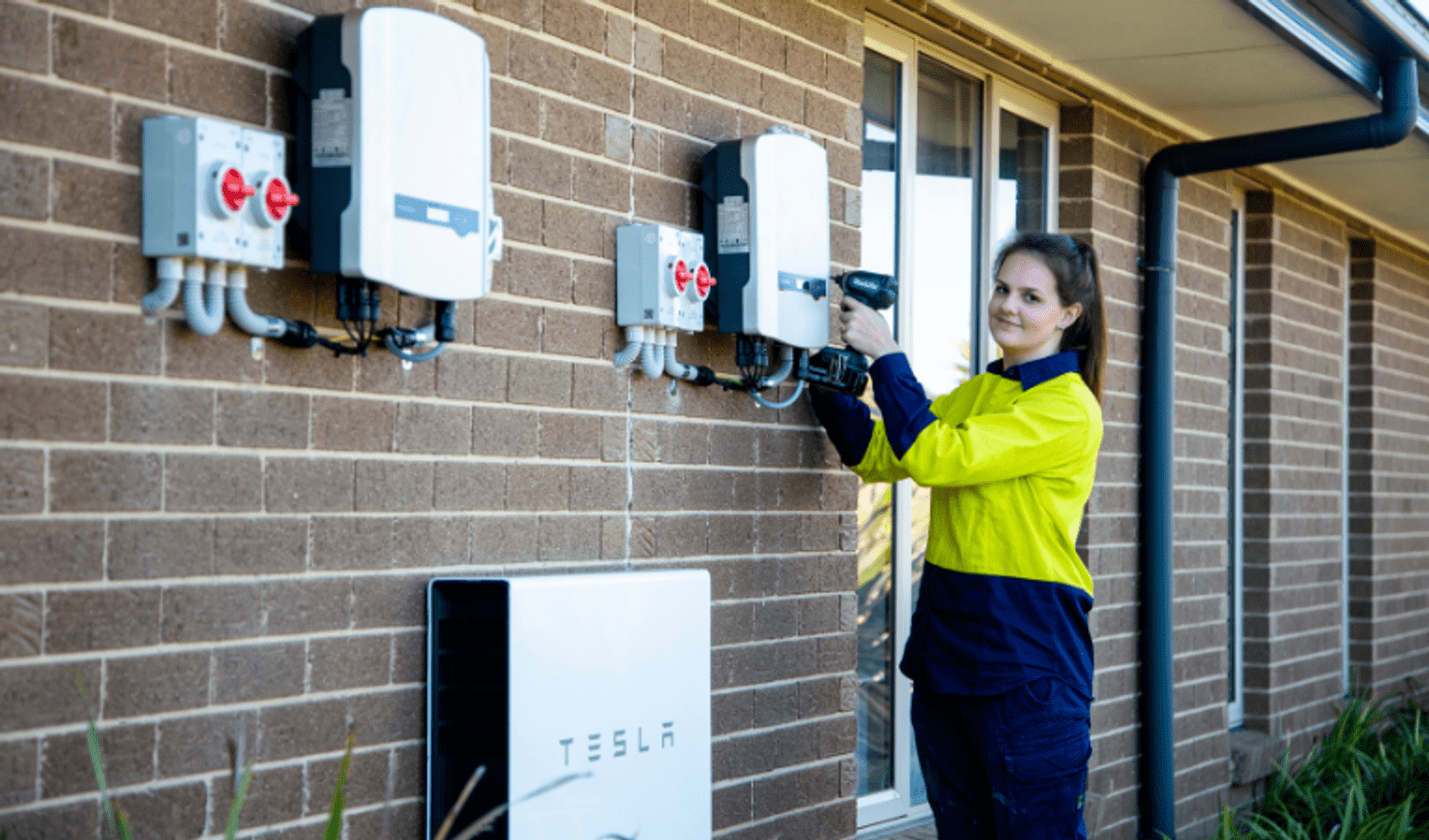
We made these resources available to installers participating in our program as part of our commitment to safety and quality.
Using these resources
If you use these resources, please ensure you have a working knowledge of the current Australian Standards and all relevant regulations.
Some Australian Standards may have changed since these resources were developed in 2023 and some may now be out of date.
Download the battery audit checklist
Independent auditors used this checklist when they conducted audit inspections of rebated solar battery installations:
They looked at the safety and quality of battery installations and determined where opportunities for improvement needed to be followed up with the solar retailer.
Analysis of these audits led to Solar Victoria commissioning a series of technical guidance sheets to help installers comply with all relevant industry standards and regulations.
Battery installation technical guidance sheets
These technical guidance sheets are part of a series we commissioned TechSafe Australia (2.1 and 2.2) and Grey Sky Solar Consulting (2.3–2.5) to develop. Energy Safe Victoria also reviewed this guidance.
They include installation advice and examples of installations that may not meet the requirements.
2.1 Physical protection of battery systems
This guidance provided further information to support installers’ understanding of applicable requirements in AS/NZS 5139:2019 Electrical installations - Safety of battery systems for use with power conversion equipment.
2.2 Battery system protection against the spread of fire and battery system restricted locations
This guidance provided further information to support installers’ understanding of applicable requirements in:
- AS/NZS 5139:2019 Electrical installations - Safety of battery systems for use with power conversion equipment
- AS/NZS 1530.1-1994 Methods for fire tests on building materials, components and structures, Part 1: Combustibility test for materials
- AS/NZS 4777.1:2016 Grid connection of energy systems via inverters, Part 1: Installation requirements.
2.3 Protection of wiring and wiring systems
This guidance provided further information to support installers’ understanding of applicable requirements in:
- AS/NZS 3000:2018 Electrical installations (known as the Australian/New Zealand Wiring Rules).
- AS/NZS 4777.1:2016 Grid connection of energy systems via inverters Part 1: Installation requirements.
- AS/NZS 5033:2021 Installation and safety requirements for photovoltaic (PV) arrays.
- AS/NZS 5139:2019 Electrical installation – Safety of battery systems for use with power conversation equipment (PCE).
2.4 Labelling requirements
This guidance provided further information to support installers’ understanding of applicable requirements in:
- AS/NZS 3000:2018 Electrical installations (known as the Australian/New Zealand Wiring Rules)
- AS/NZS 4777.1:2016 Grid connection of energy systems via inverters Part 1: Installation requirements
- AS/NZS 5033:2021 Installation and safety requirements for photovoltaic (PV) arrays
- AS/NZS 5139:2019 Electrical installation – Safety of battery systems for use with power conversation equipment (PCE)
2.5 Earthing
This guidance provided further information to support installers’ understanding of applicable requirements in:
- AS/NZS 3000:2018 Electrical installations (known as the Australian/New Zealand Wiring Rules)
- AS/NZS 4777.1:2016 Grid connection of energy systems via inverters Part 1: Installation requirements
- AS/NZS 5033:2021 Installation and safety requirements for photovoltaic (PV) arrays
- AS/NZS 5139:2019 Electrical installation – Safety of battery systems for use with power conversation equipment (PCE)
Toolbox Talks for solar battery installers
These Toolbox Talks were produced through a multi-agency partnership to increase solar battery installation compliance with industry and safety standards. They are useful also for systems installed under the Cheaper Home Batteries Program.
Select the Vimeo chapters below to hear from:
| Presenter | Topic (per chapter) |
|---|---|
| Sandy Atkins Solar and Domestic Systems Manager, Energy Safe Victoria | Parallel earth neutral connections with battery system installations. Sandy highlights the additional testing required in AS/NZS 4777.1 when installing a battery system that provides an alternative or back up supply when the grid goes down. |
| Abiel Kidane Compliance Manager, Clean Energy Council | The obligations that businesses selling battery systems to consumers are required to comply with under the New Energy Tech Consumer Code program. |
| Bradley Schnur Industry Education Specialist, Clean Energy Council | Compliant locations and the physical protection requirements of battery systems. From 19:21 |
More information
For other installation resources, see Solar industry guidance. For more information about audits in the Solar Homes Program, see Audits.
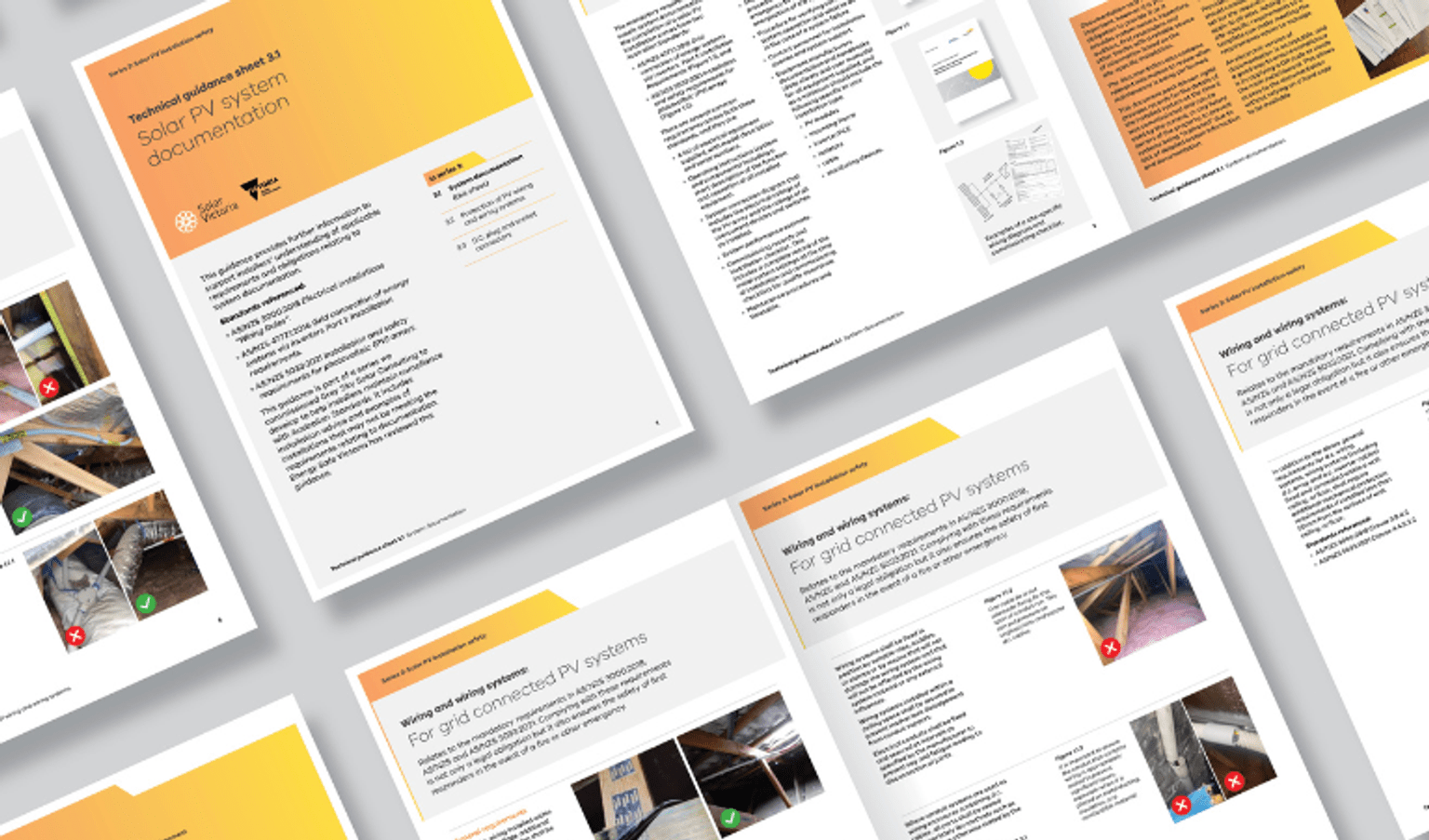
Solar PV installation guidance
Installers can use this guidance to advance their understanding of compliance standards.
Audits
Our work with regulators and industry to audit Solar Homes installations to ensure systems are installed safely and without fault.
Updated